01 Dec 2016

A biomass boost to Europe’s bioeconomy

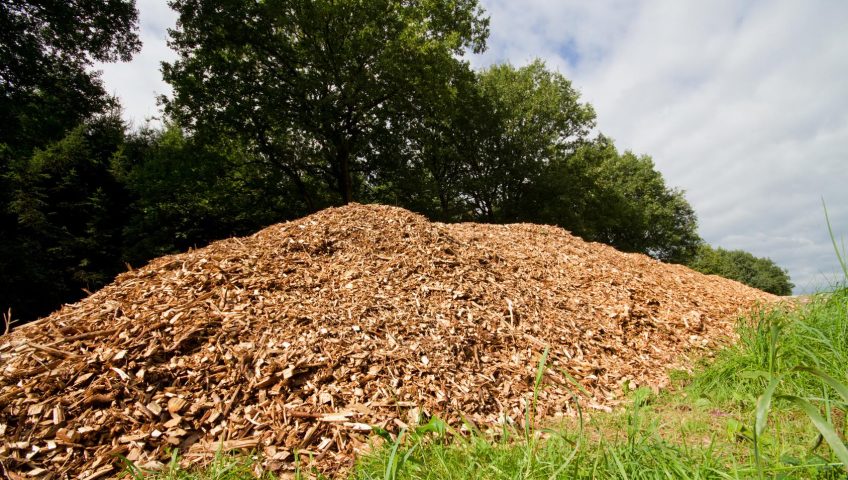
The EU is strongly promoting the growth and development of a sustainable European bioeconomy, of which one of its core components would be the greater uptake of biomass – organic materials to produce chemicals, materials, energy, pharmaceuticals, and many other sustainable and innovative products. This shift to biomass is being underpinned by substantial R&D efforts under FP7 and Horizon 2020.

Increasing the production and mobilisation of biomass can have a number of highly positive benefits for the EU’s economy and wider society. These include contributions to the EU’s fight against climate change, ensuring European (and global) food security, building blocks for new and sustainable raw materials, as well as helping to diversify the EU energy sources. The cultivation and sourcing of biomass will also benefit the EU’s long-term economic growth and would be a key generator of new and highly-skilled jobs, all within the broader context of a flourishing and vibrant bioeconomy.

In particular, the agricultural sector will have a crucial role to play in bringing biomass’s full potential to fruition. Many promising avenues are currently being explored and supported by the European Commission, such as the development of industrial crops able to grow on marginal lands, new methods being pioneered on crop diversification, and the growth of multi-purpose crops (i.e. providing both food but also non-food outputs).

As part of the wider picture, it is planned that these efforts will provide the agricultural sector with the knowledge and expertise needed to support resource-efficient and resilient strategies and solutions for biomass production that allow for increased biomass production but without compromising sustainability targets or local ecosystems.
10 Oct 2016

The Rehap project kicks off in Brussels

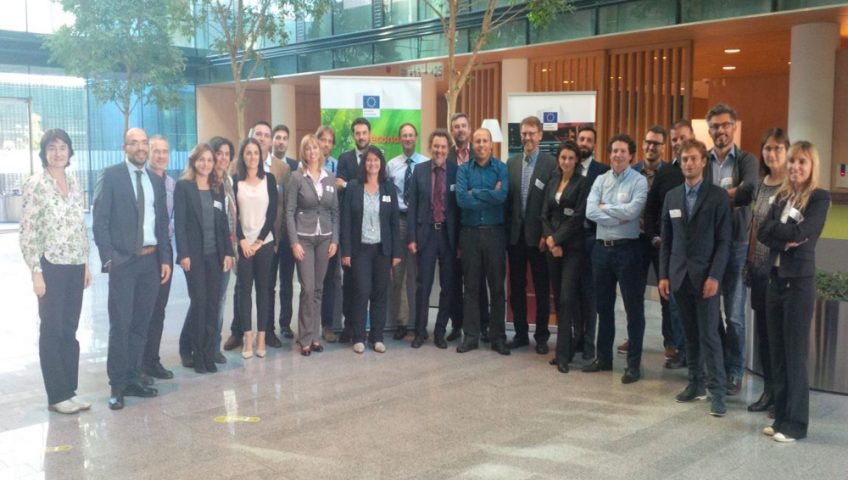
Rehap partners gathered for the official launch of the project in Brussels on October 5, 2016, where detailed discussion took place about the work programme that will be developed over the next four years.

The meeting was chaired by Rehap’s coordinator Dr. Aitor Barrio of Spanish research organisation Tecnalia. Each Work Package leader was able to present the plan of action for each work flow and inter-dependencies between partners and their activities were explored.

Project partners also heard from a senior director of the SPIRE initiative, a public-private partnership representing innovative process industries in Europe with a mission to ensure the development of enabling technologies and best practices along all the stages of large-scale existing value chain productions that will contribute to a resource efficient process industry.

By collaborating with SPIRE, Rehap will be able to reach a large database of relevant target stakeholders with information about its work and results. Rehap’s dissemination leader Insight Publishers will manage this collaboration and Rehap will appear on the SPIRE website soon.

Partners also heard from the Rehap Project Officer Mr Carmine Marzano, who spoke about the business processes and project management aspects of the next four years. This was a valuable session, touching on the commercial potential of Rehap solutions and the need for effective exploitation of this potential.

Agricultural and forestry residues are being used in many new and innovative ways and this bio-based chemical industry is now showing greater growth than the petrochemical industry. The development of chemicals and materials from lignocellulosic biomass (plant dry matter) is a particularly important area in terms of research, thanks to the abundance of these resources and because they do not compete with the food chain. However, the conversion of lignocellulosic biomass is not easy and still has little commercial viability.

REHAP aims to strengthen the European bio-economy industry by creating novel materials from agricultural and forestry waste, and considering how they can be used commercially in the green building sector.

The project has five technical objectives to do this:

  • Develop methods to convert natural wastes into sustainable polyurethanes. These can be used to develop insulation foams and adhesives, as well as fire retardant products.
  • Develop new high-performance bio-resins to produce eco-friendly wooden panels.
  • Produce eco-friendly sustainable cement with improved properties.
  • Design and assemble an environmentally sustainable and fire resistant construction solution.
  • Demonstrate the development of eco-friendly products and their sustainability and business potential compared to existing solutions.

- Click here to read how this objective will help the EC meet its targets to create sustainable patterns of consumption and production.

MENU