11 Dec 2017

October partner meeting round-up

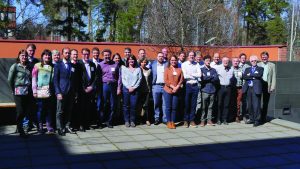
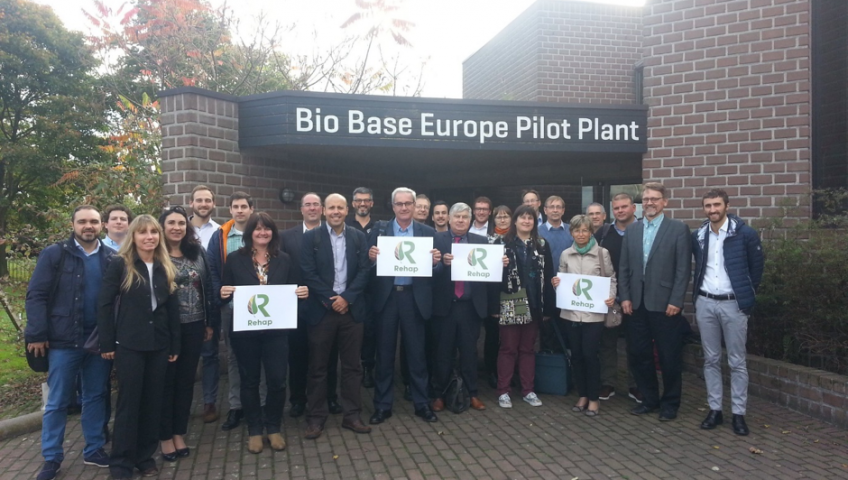
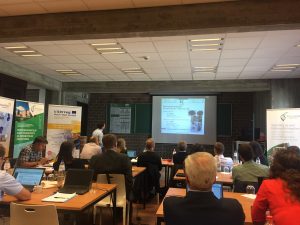
The Bio Base Europe Pilot Plant (BBEPP) in Ghent, Belgium, hosted the most recent Rehap partner meeting. Project partners came together to review the progress of actions set during the previous meeting in May, and looked closely at results from specific studies such as extraction methods and the upscaling of processes for economic value.

Partners from DAPP, D’Appolonia, now formally known as RINA-c, commenced by sharing information on key performance parameters for the sustainability, energy and techno-economical evaluation project, and identified the forthcoming first reporting period for giving technical and financial reports.

RINA-c continued by discussing the improvements with regards to key performance parameters and life-cycle assessments since May. For the next six months, a lot of emphasis will be placed on gathering information from partners via questionnaires, to help achieve Environmental Technology Verification (ETV) – a new tool to help innovative environmental technologies reach the market – and in preparation for the techno-economic SWOT analysis in December.

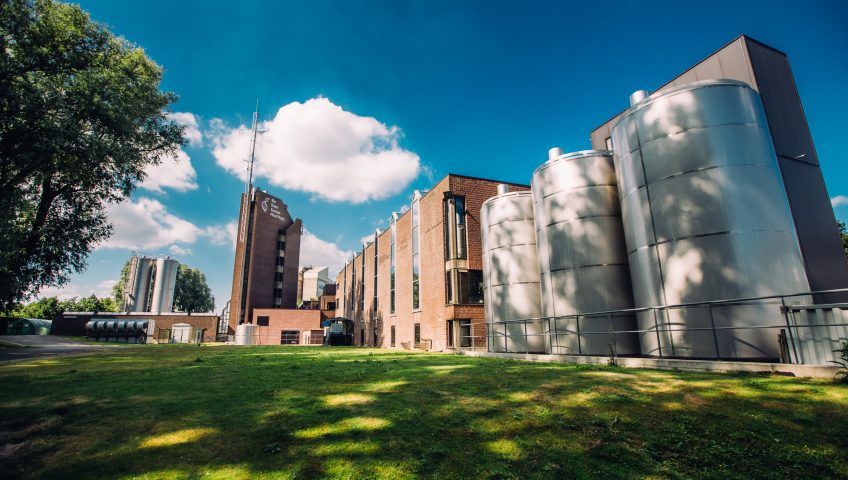
Before the end of the first day, partners had the opportunity to visit BBEPP facilities where Brecht Vanlerberghe and Henrik Waegeman gave an interesting presentation of the pilot plant before showing participants around the plant’s installations. Click here to have a look around yourself!

Tarja Tamminen, principle scientist at VTT Technical Research Centre of Finland Ltd, commenced the second day by presenting results gathered from the testing of sugar, lignin, tannin fractions and bark residue after soda cooking to determine high yields and up-scaling possibilities.

VTT’s work was further elaborated on by BBEPP representative Karel De Winter, who confirmed and continued to explain VTT’s results in more detail with regards to upscaling. Alternative processes were presented to VTT that BBEPP had already tested to understand the factors which affect and ultimately improve yield and upscaling possibilities, and to find better performing purification processes.

Further discussions followed, many centring around a new paper that had been prepared on state-of-the-art waste management in Europe which will be published in Cleaner Production at the end of the year. Partners CARTIF closed by reminding partners to keep updating the risk action plan on the partner database to maintain its purpose as a living document on the Rehap website.

Finally, Insight Publishers presented developed communication tools and asked partners to propose potential congresses to attend in the coming months. They also revealed that a new video for the Rehap website will be released before the end of the year. Keep your eyes peeled.

The next meeting will be at Tecnalia in Bilbao in March, when the actions for the next six months will be reviewed.

04 Dec 2017

Rehap visits Bio Base Europe Pilot Plant

During the most recent partner meeting in Ghent, Germany, hosted by Bio Base Europe Pilot Plant (BBEPP), participants had the opportunity to tour the plant to see what really goes on inside the state-of-the-art facility. We spoke with Brecht Vanlerberghe who heads research and development at BBEPP.

Who are BBEPP and what do they do?

You have BBEPP which is the plant, a flexible and diversified pilot plant for the development and scale-up of new or existing bio-based and sustainable processes to an industrial level. It performs the entire process from the green resources to the final product.

BBEU is the task force responsible for tasks in areas such as biocatalysis, green chemistry, and the development of industrial recovery and purification techniques, in several publicly funded projects of which 16 are H2020 projects and three are Interreg Europe projects.

In addition to this, BBEU is a service provider to many companies in the biotech domain and bio-based economy. Since 2010, BBEU has served over 100 customers in over 200 private projects in the field of development, scale-up or pilot production.

And BBEU’s mission?

To close the gap in the innovation chain of the bio-based economy, bridging science and industrial production.

What is the role of BBEPP in the Rehap project?

BBEU does the upscaling of 2,3-butanediol from fermentation, which is a renewable chemical building block.

The process performed begins from the upscaling of the extraction of tannin and lignin from bark residues which are then made available to the partners (i.e. Foresa and Technalia) for the evaluation of bio-based resins. After the extraction, the residues are hydrolysed to produce so-called second-generation sugars – sugars made from lignocellulosic biomass, or in other terms, derived from plant materials.

The substance produced by hydrolysis is called hydrolysate, and it is these that will then be evaluated by BBEPP for the upscaling of 2,3-butanediol, with a new technology developed by Biosyncaucho, a company that aims to develop high added-value chemical products from renewable raw materials. Novamont is a company that converts ex-industrial sites to active biorefineries and evaluates feedstock for the fermentative production of 1,4-butanediol. Both 1,4-butanediol and 2,3-butanediol, the final products in this process, are therefore chemicals made from renewable biomass and can replace non-renewable chemicals.

You recently hosted the Rehap partner meeting which included a tour of BBEPP. What did this entail?

I gave a brief introduction on the history, the mission and the activities of BBEPP after which Karel Dewinter, Rehap project leader for BBEPP, invited partners on a guided tour through the plant.

The BBEPP infrastructure exists out of roughly three large areas: the red hall, where the biomass fractionation and the less sensitive processes are executed; the white hall, where the fermentation processes can be scaled from the lab fermenters to 15m³ fermenters; and the green hall, where mild chemical and explosion-sensitive processes can be run.

The partners were also shown the construction area, where a new process hall is being built which will host extra, and larger, equipment to increase capacity and to enlarge the capabilities of BBEPP. The inauguration event of this new build is scheduled for February 19th 2018 – so save the date!

31 Aug 2017

8th Life Cycle Management Conference

Rehap will be attending the 8th Life Cycle Management Conference 2017 on the 3rd – 6th September in Luxembourg City, organised under the theme “Designing sustainable technologies, products and policies – from science to innovation.”

Lars Wietschel, PhD student from the University of Augsburg and recent attendee on the Mobile Flip workshop in Paris, along with Andrea Thorenz and Axel Tuma, will be presenting a poster at the LCM event. The poster entitled, ‘Raw material potential for biopolymers in Europe’ will be entered under the category “Raw material supply chains in light of life cycle economy”.

The poster explains some of the activity from the project’s work on waste management, as Lars explains, “The content is mainly about the waste from agriculture and forestry that is available in the European Union and testing which product has the most potential economically and environmentally.”

The poster breaks down into digestible sections the processes and materials that are available to help make substitutes for petrochemicals out of agroforestry waste that has no use in food, feed or industrial production. Diagrams explain a three-step approach to decide which agroforestry waste shows the largest potential - wheat straw, grain maize straw, barley straw, and rape straw.

Results from the four products tested using the three-step approach reveal that wheat straw is the most important agroforestry waste product, with the potential to be the most economic and offer the most environmentally-friendly replacement for petrochemicals. The poster concludes by drawing attention to the availability of these agroforestry products in Europe, and mentions the next steps the University of Augsburg will be taking in the Rehap project.

Lars adds: “I hope the poster will successfully highlight some of the work we have been doing and I hope to get feedback from other professionals who might be working on the same, or doing similar things in this research field. The event is about meeting other people, seeing other presentations and other posters, but it’s also a great way to broaden your horizon in this field with new information and new input.”

The LCM conferences are one of the leading conference series worldwide in the field of environmental, economic and social sustainability, and a unique feature of the event is developing practical solutions for the implementation of life cycle approaches into strategic and operational decision-making.

The conference is for international decision-makers from science, industry, NGOs and public bodies to come together and work in the field of technology towards more sustainable solutions.

04 Aug 2017

Q&A with Tarja Tamminen: Rehap in Brazil

VTT Technical Research Centre of Finland Ltd is hopping across the pond - and a little bit further - to Brazil, to attend and have the pleasure of presenting at one of the oldest and most established events in the field of biomass utilisation and bioeconomy in the world. 

On its maiden trip to South America, the 19th International Symposium on Wood, Fiber and Pulping Chemistry (ISWFPC) is taking place from 30th August to 1st September, and will be covering topics such as: chemistry, fibers, pulping, fossil energy, energy, renewable energies and biorefinery.

To a gathering of renowned international experts and relevant researchers and process engineers, Rehap project partners VTT will be presenting at ISWFPC on the influence of softwood bark origin on tannin recovery by hot-water extraction.

The presentation, led by principle scientist at VTT Tarja Tamminen, is based on master’s student Miikka Ruuskanen’s thesis written as part of the Rehap project, The influence of the origin and treatment history of spruce and pine bark on the extraction of tannin, and is set to be an interesting topic for discussion.

We spoke to Tarja about what to expect at ISWFPC.

Have you attended this event before?

Yes, I think I have been to most of them and I also personally know more than half of the presenters at the event, so I am really looking forward to going there and seeing what the presentations are about this year. Up until 10 years ago the event was more focused on pulping as that is what biorefinery was when the event began, and so now it has broadened into different kinds of uses of biomass, but with the main focus centred on wood chemistry. This means looking at ways to exploit the use of wood in a chemical sense – not construction – through chemical modifications to make other wood or wood components and wood fractions.

What will you be presenting on?

Continuing on from what I just said about the conferences’ main focus being on wood, in Rehap we are working with bark. Currently, making pulp and paper is where the value of the biomass product comes from but when you make pulp and paper you need to separate the bark from the wood. This creates a bark side-stream, which is where Rehap comes in. It would be beneficial for the industry to find higher value for the bark side-stream and so at VTT we have been developing methods to extract tannins out of wood bark to improve the valorisation of the value chain from bark side-streams. This is where we hope our presentation will offer interesting results for anybody working with wood or its value chain.

Which presentations would you recommend to those interested in the work of Rehap?

To name a few:

  • “Valorisation of lignocellulosic biomass residues via hydrothermal treatment and carbonisation” – this is on softwood bark which is one of the raw materials in the project and the presentation will include characterisation methods and data
  • “On the reactivity of lignin-carbohydrate complexes (LCCs) under pulping and biorefining conditions” – LCCs are also present in Rehap raw materials and fractions
  • “Measurement of leaf lignin of a Japanese oak tree (Quercus crispula) by a combination of methoxy determination with alkaline nitrobenzene oxidation and its application” – a poster on the challenges for determining lignin in the presence of tannin. VTT has also developed a method based on methoxyl content for the bark samples.
03 Aug 2017

Rehap meeting round-up

The VTT Technical Research Centre of Finland hosted the second Rehap consortium meeting, where partners came together to discuss the overall progress of the project, looking closely at results and developments from specific studies such as the life-cycle analysis (LCA), and lay strategies for future activities and actions.

Partners from D’Appolonia (DAPP) commenced by presenting information on key performance parameters for the sustainability, energy and techno-economical evaluation project, identifying the key partners for each production chain, the data required, and pending plans for partners to deliver price information and possible by/ co-products for benchmark analysis.

Mr. Axel Tuma from the University of Augsburg, Germany, presented partners with data gathered from the first deliverable on agroforestry and displayed interesting results on where biomass resoRehap_workshop_3urces are available in Europe. Click here: Raw material potential for biopolymers in Europe.

Partners Cartif, explained their study on quality standards and protocols of agricultural materials – in particular wheat, maize and barley - in order to determine critical strictures and prevent issues such as the over reaping of materials, and to set regulations that ensure the final product meets set standards and purpose. A biomass database has been created to keep track of the results from biomasses treated within the project.

Further discussions followed on the optimisation of biomass waste streams, with several partners presenting materials they will be testing for the development of final products. For example, a smaller sample is needed of wheat straw lignin cake for further characterisation and content testing, and increased testing of spruce bark is needed for improved tannin yield.

In light of these technical Rehap copydevelopments, Mr. Hendrik Waegeman explained the upscaling capacities and equipment’s available at BBEPP for future processing.

Finally, Insight Publishers Ltd. presented updates on the project communication and dissemination and the work done so far in raising the profile of Rehap and the development of the Rehap website.

The meeting ended with partners presenting a number of actions to be completed over the next six months, to be reviewed in October 2017.

03 Aug 2017

SPIRE EU Process Industry Conference 2017

The Process Industry Conference is a SPIRE mid-term policy event and will be taking place on 19 September 2017 in Brussels to discuss and showcase some of the exciting projects ongoing with SPIRE.

The event will be dedicated to picturing the future EU Process Industry and what can be implemented if appropriate investments are met.

The event is open to all interested stakeholders and will include a number of interesting lectures from industry led experts on the topic of ‘A look to the future’. After a lunch of networking, the afternoon will be jam-packed with compelling short five to six minute pitches from SPIRE projects.

Under three parallel projects’ sessions, projects will give a short overview of how they are tackling and solving EU and SPIRE needs, and how the project will be able to bridge needs to solutions. The three sessions are:

  1. Modelling and integrated process control; Process optimisation
  2. Valorisation of different energy sources; Adaptable processes using alternative feedstock
  3. Waste to resource; Industrial symbiosis; Water; Business models

The audience will have the opportunity to vote for their most favoured project on the basis of the projects ‘look to the future: to what extent did the project’s presentation make you dream about the future?’, and ‘creativity: which picture and slogan was more appealing?’.

Two additional days, 20 and 21 September, dedicated to thematic sessions and a brokerage event will be hosted for A.SPIRE members only.

Registration is now open.

For more information visit SPIRE website.

02 Aug 2017

REHAP makes waves at the 25th European Biomass Conference and Exhibition in Stockholm

The global biomass community gathered in Stockholm from June 12-15 to conduct business, network and discuss the latest developments and innovations as well as to discover the most innovative bioenergy applications from industry – and REHAP was there in force.

EUBCE is the most important international conference for the biomass sector, combined with a technology exhibition. For more than 30 years, it has been serving as the annual meeting point for biomass experts from research, development and the industry. With presentations addressing the latest technologies, the policy framework, and the medium and long- term strategies and potentials, EUBCE is the interface between science, industry and policy makers.

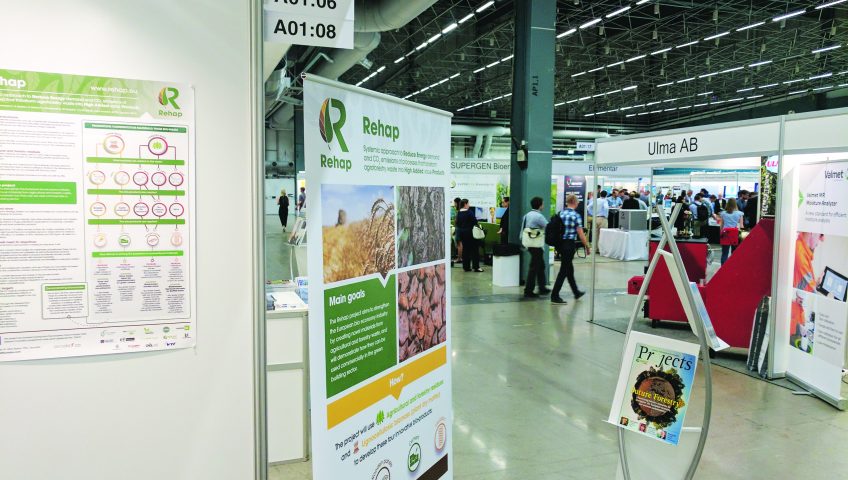
As such, many research projects were also present, with REHAP also on display. Insight Publishers, REHAP’s communications WP leader, was the Platinum Media Sponsor for the event and was able to use this opportunity to promote its bio-based projects. The REHAP poster was on display, while hundreds of project lea ets were also distributed. IPL’s William Davis and Sam Davis were also on hand to explain the project objectives to interested delegates.

And there were more than 1,500 delegates from 70 countries in attendance and, as the hosting country, Sweden ranked first by number of participants, followed by Germany and Italy. More than 850 presentations covering the entire scope of biomass value chains were given as well as two parallel events and five workshops conducted. As part of the event programme, a tour to Scandinavian Biogas Södertörn Plant was also organised.

David Baxter, Former European Commission, Joint Research Centre said: “The very strong message we all heard at the beginning of the conference was that replacement of fossil fuels (coal, oil and natural gas) in the shortest possible time is absolutely essential. There is no time to lose eliminating fossil carbon emissions from the activities of human society. It is clear that all available alternatives to fossil fuels are needed and that biomass is an essential component in the transition to a 100 per cent renewable society.

“Hence the main theme of the conference,“The indispensable role of biomass”. While maintaining adherence to the principles of environmental sustainability it is therefore obvious that it is a question of how biomass can be utilised for bioenergy, biofuels, biochemicals and the wider bioeconomy and not whether biomass should be used at all.

“Strategies for the integrated use of biomass
within the widest scope of land use are essential. Appropriate technologies are already being exploited as we heard in EUBCE 2017 and research will continue to EUBCE 2018 and beyond.”

Henrik Hernrooth, Chairman of the Boards of Pöyry PLC and Chairman of the Climate Leadership Council, Conference General Co-Chair added: “I feel that we need to gradually move from sustainability debate into sustainable action. In order to define what it is sustainable we need better measurements of biomass. Biomass is visible from the satellite and it is an interesting carbon stock that we can now measure with proper tools. Much of the debate about future is about threats. We need to move this debate into a positive vision.”

Heinz A. ossenbrink, Former European Commission, Joint Research Centre, described his perspective on integrating renewable energies along eight Vs - Vision,Variety,Versatility, Vectors, Value, Vulnerability, Visibility and Victory - concluding that renewable energy could provide 100 per cent of Europe’s energy by 2042.

Gustav Melin, Managing Director, Svebio said: “In the last 10 years, we got three times more carbon assimilated in biomass than what is needed for one year global energy supply. So, I would like to give two messages to all scientists: stop talking about bioenergy as a limited resource. All facts show that there is enough biomass for all energy needs. Stop talking about non-food biomass: it is an irrelevant argument, there are always other reasons behind starvation than our capacity to grow food.”

Nicolae Scarlat, Technical Programme Chairman, European Commission, Joint Research Centre, Directorate for Energy,Transport and Climate, summarised the results of the conference into four take-home messages: “We need long-term vision, policy consistency and stability; we need transformation of the economy, not a marginal change; we need technology specific policies instead of technology neutrality; we need phase- out fossil fuels and keep fossil carbon in the ground.”

The 26th European Biomass Conference and Exhibition will take place in Denmark on 14-18 May 2018 and will include a technical tour. IPL will be media partners again and there will be free delegate places available for REHAP partners.

01 Aug 2017

Interview with Professor Axel Tuma and Dr. Andrea Thorenz

Professor Axel Tuma, Dr. Andrea Thorenz
Chair of Production & Supply Chain Management, Institute of Materials Resource Management, University of Augsburg
Professor Tuma and Andrea Thorenz are currently working with the REHAP project, which is aiming to strengthen the European bio-economy by creating novel materials from agricultural and forestry waste, and assessing how they can be used commercially in the green building sector. Still in the early stages of the project, the main task being they are undertaking at present involves a literature and data base review about the ‘arisings’ and focal substances like lignin, tannin or cellulose of the first aggregate, which will be used for the project. Arisings are the amount of base material available to be used at the start of the value chain in the development of bio-products.

Has this study revealed any interesting findings to date?

axel headshotAXEL: Well, our study is basically looking at how much “stuff” we have in Europe and, if we scale up what we have found so far and if we are really successful in the project, we think we can drive a bio-economy with agroforestry waste.

The study has focused on how much base biomaterial we have in Europe and where is it located. For example, we have found out that we have a lot of wheat straw in the Paris area. So, the interesting question now is how much of it can we use? First of all, we have the bio-mass, but of course everything that is needed in the food chain should remain for food; we don’t want to touch this. The next thing is to look to the farmers; they use, for example, straw as a soil conditioner. We don’t want to change this, so we need to work out the sustainable removal rate. For example, only 40 per cent of the wheat straw should be removed from the field. Then we have other competitive users like horse bedding, straw for cattle and so on. Essentially, we want to keep things sustainable and traditional in terms of all this, and calculate what we are able to remove while doing so. In this way, we don’t touch the food issue and are sustainable when it comes to farming methods.

How have you done this study?
andrea headshotANDREA: First of all, we investigated all the existing databases. Fortunately, the data that exists about the subsidies the farmers get from the European Union is very well reported and clearly shows where the bio-mass from this goes. We have also taken some research using industry reports and we have now put all this data together. What we have produced is a report about where materials come from and what are most useful for us.

 The most promising species in the agricultural sector is wheat, which we expected, with large arisings of 46million tonnes of bio-economic potential, which we can use without bothering the farmers. This is followed by maize stover, barley straw and rapeseed. In terms of the areas where these materials are currently grown, it is quite interesting. The area of Paris is really important concerning wheat straw, with nearly 7 million tonnes in the area alone. South West France is also highly productive with wheat, so, France is very important in terms of wheat. The Czech Republic and Bulgaria follow. France, again, Italy and Romania are important areas for maize stover and the area of Paris and Spain are interesting concerning barley and rapeseed.

Were any of these results unexpected?

ANDREA: Yes. It is the first time that we have used this type of research and I was surprised with the fact that it is so centred on France. I think that we have a lot of materials. If we put it all together, it is more than 100 million tonnes per year and that is a very good base on which to build a bio-economy.

Did you also work on forecasting how much material will be available in the future?

AXEL: Yes. And again, wheat is the most promising. We used different methods, based on expert estimations from the European Union. If you look at the example of rapeseed, in the last 15 years, we have grown production from around 10 mega tonnes to 25 mega tonnes. This 2.5 growth factor is due to the fact that rapeseed goes to the bio-energy sector and this is incentivised. So, you see that when there is an incentive driven by the EU, it does work.

On the other hand, when we look at the expert’s estimations going forward, we see that they are going down in terms of rapeseed production. An explanation for this is a lowering of the incentives to grow rape for energy and so a switch away from energy crops in general. The interesting thing here for me is the clear impact the policy makers have on growth yields. This, of course, is positive news for projects like REHAP, because if we are successful and can convince policy makers of the benefits of our bio-products, what they then do can have an impact on what biomass is grown and where. So we can help drive policy.

Would it be fair to say that if we continue growing rapeseed at this rate, that it is using land that could be used for other crops?

AXEL: Yes, that is true, which is why it also is important to carry out social and life cycle assessment. We have to balance this and look at all the processes involved in making a bio-product and assess the impact it all has, environmental and even social impacts. I think that is the very clever approach this project is taking. So, the study is now proving from your initial results that there is a good basis for expanding the bio-economy based on what is available and what can be used sustainably.

What is next once this particular work is done and how can this then be usefully applied?

ANDREA: After this study, we will deal with the issue of quality - the question of whether or not the quality is sufficient in the places we find the materials. This work is done in the same work package, and will impact on the data we have produced and enhance it. We will then complete the database and make it available for all. This will show us where the most interesting bio-mass, like wheat, maize, barley and bark is now and will be for the next 10 years for specific regions of Europe. It will also, to a large extent, identify the quality of this material as far as we can.

AXEL: Another point about this study that was also interesting relates to the issue of sustainable supply chain and resource management. Coming from a background of supply chain management, I am normally developing strategic supply chains, which means where is the procurement site, where are the production facilities, where are storage areas and distribution centres?

So here we will design an optimal network for a European bio-economy. What is the cost, ecoefficiency and the optimal procurement strategy in these areas? From there, we can predict how many procurement points, how many storage points, what facilities and what capacity is needed and where, hopefully close to the customers. We will do this on a cost data basis, but also using the life cycle data and the social life data. With all this in place, the data you have and then the planning for the infrastructure, how big do you think that the bio economy can get? AXEL: The people are so inspiring and to be honest, I cannot really estimate. In my opinion, it is difficult to develop all these bio chemical processes but I am optimistic with the skills of the people.

So, significant growth potential is there?

AXEL: Yes. I think so. We are really believers in closed-loop supply chains, which mean that we do not only look at the supply chain, but also issues like re-use, re-manufacturing and effective recycling. This is a common approach with industrial products, like computers, cell-phones and so on. So, this is the first time that we have entered this bio-arena and looked closely at a green cycle or the starting point of a green cycle.

What do you mean by green cycles?

ANDREA: A green cycle means that all the products we construct, from the first material, will come back in a recycling cycle. We really believe that if we want, or if future generations want, life on this planet, we have to imitate nature, which really does go in green cycles and has done for hundreds of millions of years. Take a tree, which can stand for hundreds of years. When it falls, microorganism take its residues, make fresh soil and give life to new trees. In the same spirit we must produce bio-based products, which will be reintegrated in nature and come back in many new ways and cycles. This is the starting point for a green cycle and a circular economy. It is our belief that if we work in this field we will come closer to nature and in that way we can develop a real circular economy, as nature has done for hundreds of millions of years.
31 Jul 2017

PhD student carries 4kg of straw back from Mobile Flip meeting

Rehap sent PhD student Lars Wietschel to Paris to attend the workshop of another SPIRE 2030 project, Mobile Flip – the Mobile and Flexible Industrial Processing of Biomass. He was there to exchange developments and resource sampling, build friendships and contacts with other project researchers, and to return home with a rucksack full of straw.

Currently working as research assistant at the Chair for Production & Supply Chain Management at the University of Augsburg, Lars was invited to attend Mobile Flip’s second Demonstration Technical Meeting by Dr Tarja Tamminen, the project coordinator of Mobile Flip and leader of Rehap’s second work package, and Dr Andrea Thorenz who is involved with Rehap’s waste management work package.

One of Mobile Flip’s main objectives is to use mobile processing for the treatment of the underexploited organic materials that are produced as by-products when agriculture and agroforestry are harvested, and utilise these biomass resources into products such as fuel or biodegradable pesticides.

As a result of Rehap’s waste management research, the University of Augsburg identified the region of Bassin Parisien, the area surrounding Paris, as the region with the largest bioeconomic potential of wheat straw across Europe. This lowland belt around Paris can produce crops all year round because of its optimum climate, compared with Germany where the winters are too harsh for harvests to grow and, therefore, the bioeconomy is not as prevalent.

Lars was the only Rehap project associate on the Mobile Flip workshop but remarked on how interesting it was to meet members working under the same umbrella cause – the better use of biomass. He added that, “it was nice to go and meet other researchers as it is easy to forget, or put the time in, to network with other projects. Whilst Rehap and Mobile Flip have different project outcomes, meeting and talking with them has definitely built a great new network for the future.”

The aim of Lars’ participation was on the one hand to do just this and exchange different SPIRE projects with similar aims, and on the other hand to retrieve some wheat samples for different biophysical analytics.

The meeting consisted of numerous field trips around Paris to different companies and organisations involved in agricultural and forestry activities. On-site demonstrations included the application of heat and chemical processes in the production of energy products from biomass, the demonstration of agricultural biomass production, and a visit to an industrial site processing agricultural biomass.

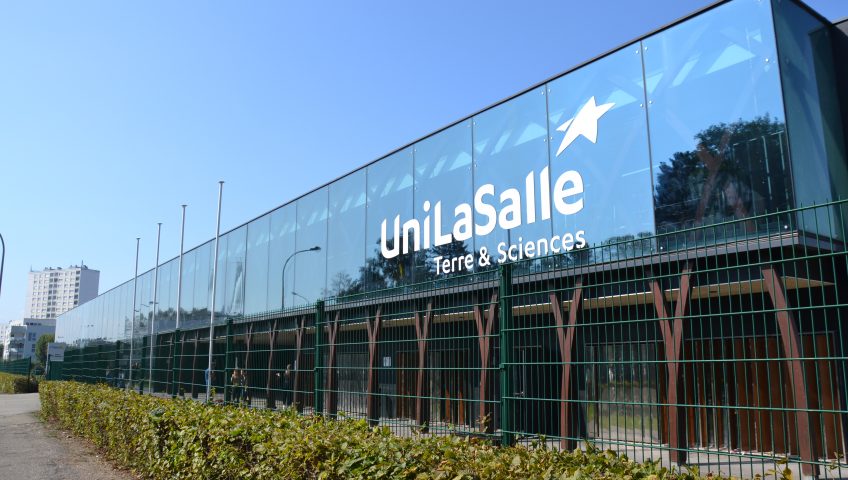
“For me, the most interesting visit was to the university, UniLaSalle, in Beauvais, as the work being carried out there is most closely linked to our first task in Rehap, the assessment of residue potentials,” reported Lars. The university has a large agricultural research institute participating in important studies on the maximisation of cereal and straw yields by maintaining sustainable, healthy and productive high soil qualities, also known as the sustainable removal rate.

When Lars asked UniLaSalle whether a batch of their straw could be taken back to Germany for testing, “they replied by stating that they had a lot of straw left over from their research acitivites and so they kindly handed me loads! Luckily I had my hiking bag with me and so I managed to carry four kilograms of straw back with me on the train.”

When the straw arrived back in Augsburg, it was sent to the laboratory in Valladolid for further investigation for the Rehap project.

26 Jul 2017

Karel De Winter attends Biotech 2017 conference

In June, Karel De Winter from Bio Base Pilot Plant (BBEPP), partners on the Rehap project, attended the four-day BioTech 2017 conference in Prague on important aspects of advanced biotechnologies. Across the four days, lectures and poster presentations were organised under the following sessions: medical and pharmaceutical biotechnology; environmental biotechnology; food and agriculture biotechnology; and biorefinery and industrial biotechnology.

The biorefinery and industrial biotechnology sessions focused on discovering and searching for new ways to process different kinds of waste, how to obtain valuable compounds such as biofuels and bioplastic building blocks, and also a key aspect of what De Winter works on at BBEPP.  “We combine technologies (biomass pre-treatment, green chemistry, fermentation, biorefining and downstream purification) for advanced manufacturing of converting biomass, in particular industrial side streams and agricultural crops, into bio-based products,” explains De Winter.

The environmental biotechnology sessions focused on how biological systems can help restore contaminated environments – land, air and water. Special attention was dedicated to the research associated with energy recovery and material recovery from waste to create a circular economy, when resources are kept in use for as long as possible by recovering and regenerating products and materials.

De Winter added, “This was very appropriate in regard to the work Rehap are doing in following the codes of a circular economy, by avoiding waste and trying to maximise the use of all waste streams.”

De Winter attended numerous invited lectures during the event, which took place in the spectacular National Library, on both biorefinery and environmental biotechnology. Discussions were centred around how to make use of all renewable and biological materials, and the need to establish an outline of which processes and technologies are the most noteworthy and applicable.

Tommaso Lotti, from Politechnico di Milano in Italy, presented a stimulating lecture entitled “Physiochemical characterisation of EPS-based biomaterial recovered from anammox granular sludge”. Anammox is an oxidation process appropriate for the treatment of nitrogen-rich wastewater. The granulation process – breakup – of anammox biomass offers an effective strategy to preserve the biomass in anammox reactors. The recovery of biomaterials from the sludge produced — the semi-solid slurry created from wastewater treatment processes — for use in a variety of industrial sectors would substantially increase the sustainability and economics of wastewater treatment, promoting the development of the circular economy that Rehap is working toward.

De Winter was particularly excited by the presentation led by Henk Noorman from Delft University of Technology in the Netherlands, entitled “Syngas fermentation design for hybrid biorefineries”, a highly relevant topic but one that has not been widely covered in the Rehap project. Henk discussed turning gas from fuel production of domestic and industrial waste, as well as forestry and agro-residues, into syngas - a mixture of gases comprising of carbon dioxide, carbon monoxide and hydrogen. This is produced by converting organic based carbon materials, followed by fermentation to bioethanol for the use in biomass products.

De Winter concluded that, “it is always interesting to network and meet people at such events and it is great to see that there is a lot of work being done on the biorefinery concept. Attending the event made it clear that Rehap is a noticeable figure in the biomass market, producing models from different waste sources and actually making final usable products out of them.”

MENU