17 Jan 2018

Invitation to BBEPP’s event of the year

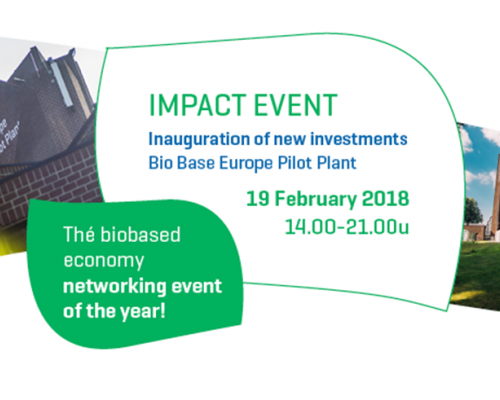
Bio Base Europe Pilot Plant (BBEPP) has kindly invited Rehap project partners to attend the IMPACT project event, where a new €9m investment will be inaugurated.

A staggering €9.36 million investment agreement has been signed by the European Regional Development Fund Flanders and BBEPP, in the frame of the IMPACT project, and will be inaugurated on 19th February 2018 at BBEPP, Ghent, Belgium.

The IMPACT event will start at 2pm and will celebrate the investment and elaborate how it will be used to build new research infrastructure, specifically for gas fermentation and down-stream processing, which will enable BBEEP to use the full potential of its 15m3 fermenters. The pilot plant makes Flanders a frontrunner in terms of industrial biotechnology, and this investment will stimulate economic growth in and around the region.

BBEPP is expecting to host 400-500 participants, making the event the most anticipated bio-based economy networking event of the year. There will also be the opportunity to listen to a number of interesting talks on the European bio-based economy and IMPACT throughout the day.

As well as an additional networking reception for participants, BBEPP are kindly putting on guided tours of the plant for those interested in going behind the scenes.

If you would like to attend, simply visit the website and register for FREE.

A B2B partnering tool will be available from January 15th for participants only.
15 Jan 2018

Rehap to attend EUBCE 2018

Lars Wietschel from the Resource Lab at the University of Augsburg will be attending the European Biomass Conference and Exhibition (EUBCE) 2018, where he will be presenting a poster on EU agricultural residue potentials as part of the wider Rehap project.

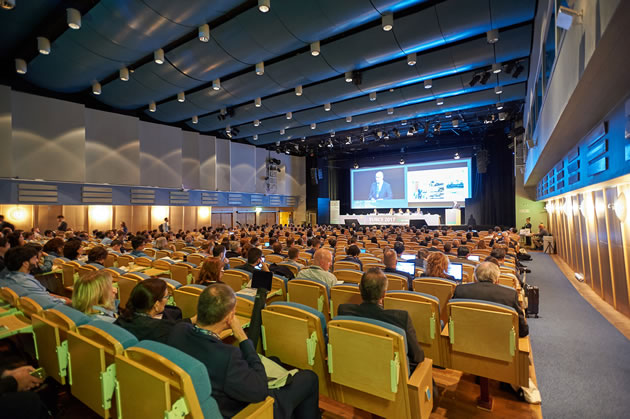
The event, which takes place in Copenhagen on May 14th – 18th, combines one of the largest biomass science and technology conferences with a high quality industry exhibition, attracting biomass professionals from around the globe.

Wietschel’s poster, titled “Assessment of European Union’s agricultural residue potentials available for high-added value products: Current state and future development”, summarises a methodology for the forecasting of agricultural residues in the EU.

The scientific novelty of the work being presented is the assessment of available and future potentials of lignocellulose residues for use on an industrial scale. The poster will present the results of this study which will help forecast the bioeconomic potential of each agricultural residue and future farming possibilities, contributing to the current discussion about the EU’s feedstock availability for a future bioeconomy.

This is a huge opportunity for Rehap and will provide the project with a platform to showcase their advances and results to some of the leading biomass specialists and professionals from around the globe.

We will catch-up with Lars during and after EUBCE 2018 to get his take on the event.

08 Jan 2018

Rehap publish first scientific paper

The Resource Lab at the University of Augsburg have just published Rehap’s first scientific project paper in the Journal of Cleaner Production.

The paper, “Assessment of agroforestry residue potentials for the bioeconomy in the European Union”, was written by a team of four from the Resource Lab at the University of Augsburg: Andrea Thorenz, Lars Wietschel, Dennis Stindt and Axel Tuma.

Accepted at the end of 2017, the paper extends the work of existing EU papers and studies the forecasting of arisings across the EU and how suitable these agroforestry residues are for transforming into high added-value products for the green building sector.

The team revealed some interesting results on which residue in the EU is most important for both the agricultural and forestry sectors, as well as learning about other materials that are of importance for industrial use in the bioeconomy.

The paper concludes by drawing upon the potential barriers facing the use of EU agroforestry waste in the Rehap project due to changes to farming technologies, as well as changes to the availability of this waste due to other concepts such as second-generation biofuels competing for the feedstock, for example.

Read the complete paper here. The Journal of Cleaner Production will be published in March 2018.

03 Jan 2018

Rehap apply to exhibit at leading EUBCE

The Resource Lab of the University of Augsburg, and leaders of Rehap’s waste management research, have been keeping busy applying for conferences, scientific papers, and reporting on recent results.

Lars Wietschel, from the University of Augsburg (UNIA), spoke of the recent developments taking place within Rehap with regards to their research, the first of which being the application they placed to exhibit at the 2018 European Biomass Conference and Exhibition (EUBCE) in Copenhagen in May.

EUBCE is the largest platform and gathering of biomass experts for the collection, exchange and dissemination of scientific and industrial know-how in the field of biomass. The event combines one of the largest biomass science and technology conferences with a high-quality industry exhibition and attracts professionals from around the globe.

If UNIA’s application is accepted, this will be Lars’s first time at the event and he hopes to present methodology and results from the research they have been undertaking on forecasting the future of agricultural and forestry waste arisings in the European Union. Arisings are the surplus materials that form the waste products of agriculture and forests after they have been harvested for other purposes.

“We handed in this extended abstract - the forecasting of arisings - plus an oral presentation. If we are accepted for a full paper, we will publish a peer-reviewed conference paper in the journal ‘Biomass & Bioenergy’,” said Wietschel on applying for the EUBCE.

Part of what has been proposed as part of the EUBCE application includes the results from a completed project deliverable. A report was written and a database was created that provided information on the forecasting of the future of biomass feedstock in the European Union over the next 10 years. The database provides information on the forecasts of waste arisings until the year 2027.

“Some of the interesting results we found from our research on this topic revealed that for agricultural residues we forecast increasing arisings for wheat straw, maize stover and barley straw, and for rape straw we forecast decreasing arisings in the next 10 years, which is mainly due to a reduced demand in first generation biofuels,” said Wietschel. “We also assessed the influence of extreme weather events on the projection of biomass and our results showed that heatwaves and a lot of precipitation have a strong negative influence on their annual production quantities.”

Rehap hope to hear the outcome of their EUBCE application in the new year, so watch this space.

MENU