With REHAP entering its final phase, there is increasing interest in its impressive results, highlighted now by the publication of two new papers in influential publications Industrial Crops and Products and the Journal of Industrial Ecology. Both are published in Open Access, while the latter received a prestigious gold standard award for data transparency.
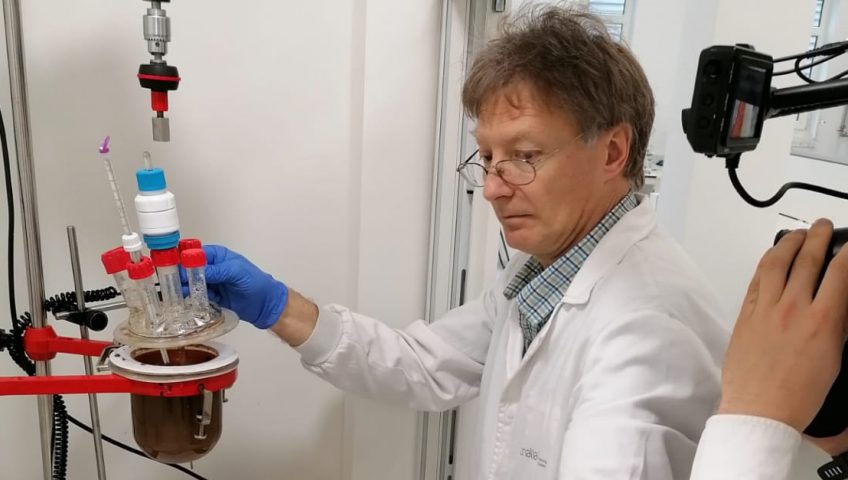
Industrial Crops and Products published a paper titled Valorisation of Hydrolysis Lignin Rest from Bioethanol Pilot Plant: Process Development and Upscaling based on the work in the project at Tecnalia, the Bio-Based Europe Pilot Plant (BBEPP) and VTT.
The aim of this work was to find a scalable process to purify lignin and separate the cellulose-rich fraction from a poplar wood hydrolysis rest produced at a bioethanol pilot-plan and the results support the suitability of the solid rest hydrolysate as a fermentation feedstock, allowing an enhanced valorisation of this lignocellulosic residue.
Lead author on the paper was Ingemar Svensson with Tomás Roncal and Aitor Barrio of Tecnalia, Karel de Winter, Anoek Van Canneyt of BBEPP and Tarja Tamminen and Atte Mikkelson of VTT.
More recently, the Journal of Industrial Ecology published another REHAP paper titles Environmental Benefits of Large-Scale Second-Generation Bioethanol Production in the EU: An Integrated Supply Chain Network Optimisation and Life-Cycle Assessment Approach.
The work, conducted by REHAP partners at the University of Augsburg, examined the environmental benefits and economic viability of optimal second-generation bioethanol production network configurations to substitute petrol and/or first-generation bioethanol in the EU using multi-criteria mixed-integer linear programming in a multi-dimensional analysis approach.
The results comprise environmentally optimal decisions for 18 impact and three damage categories, as well as economically optimal solutions for different excise and carbon tax scenarios.
The impact categories global warming potential, particulate matter, and land use are affected the most. Optimal network decisions for different environmental objectives can be clustered into three groups of mutual congruencies, but opportunity costs between the different groups can be very high, indicating conflicting decisions. The decision to substitute petrol or first-generation ethanol has the greatest influence. The results of the multi-dimensional analysis suggest that the damage categories human health and ecosystem quality are suitable to unveil tradeoffs between conflicting environmental impacts, e.g. global warming and land use. Taking human health and ecosystem quality as environmental decision criteria, second-generation bioethanol should be used to concurrently substitute first-generation bioethanol and petrol (100% and 18% of today’s demand in the EU respectively). However, economic optimization shows that with current taxation, bioethanol is hardly competitive with petrol, and that excise tax abatement or carbon taxes are needed to achieve these volumes.
Lead author on the paper was Lars Wietschel along with Lukas Messmann, Andrea Thorenz and Axel Tuma, all of the Institute of Materials Resource management at the University of Augsburg.
Tell us about your education and working life up to now
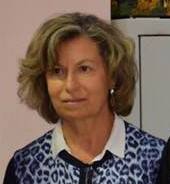
In 1978, I graduated in biological sciences at the University of Genoa, Italy. After a year of work in Liguria, I moved to the USA for a four-year postdoctoral fellowship at the Johns Hopkins University, Baltimore, MD, where I performed research in the field of molecular biology. In 1984, I returned to Italy to work for four years as a researcher in Farmitalia Carlo Erba, a pharmaceutical company located in Milan. After that, I worked for four years in Agrimont, Tuscany, were I was responsible for the Molecular Biology Laboratory, working in the field of agriculture. After the closure of Agrimont, I was hired by Tecnogen, a research company active in pharmaceutical research and the development and production of investigational medicinal products. I spent about 20 years at Tecnogen covering a number of different roles, including managing the molecular biology laboratory (1991-1998), the quality control laboratory (1999-2001), being in charge of development and production (2001-2002), after which I became the technical director (2002-2009) and finally the head of production unit (2009-2012). The company was then put into liquidation, and so I joined Novamont in 2012 as biotechnology area manager. After the Tecnogen was acquired by Novamont and transformed into a Biotechnology Research Centre, I also became responsible for this research unit.
What is your main expertise?
My expertise is mainly in industrial biotechnology, with a focus on biochemicals production by fermentation and purification. I have a background in molecular biology and in the production of investigational medicinal products.
What is your work focused on in the Rehap project?
I am responsible of the activities that Novamont carries out within Rehap, like testing alternative renewable feedstocks for the production of a bio-building block and demonstrating the process at relevant scales.
What are the main challenges you face in this work and how are you meeting these challenges?
It is important to identify the optimal protocol for the production of building blocks with alternative renewable feedstocks in order to obtain a final product with high performance and purity grade. The continuous interactions and comparisons with other project partners and with their different experiences allows us together to find a solution to the technical challenges usually based on the different and complex characteristics of the renewable feedstocks used.
How do you see your work helping the project achieve its main objectives?
My work can help the project through the valorisation of a biomass residue by using it for the production of a valuable biochemical. In particular with our researchers, we work in parallel to the development and continuous optimisation of the process for obtaining intermediates from waste cellulose. The more suitable formulations will be selected for the projects applications identified.
What impact do you see Rehap having in the future?
The project will find new solutions to valorise new sources of renewable starting material (agricultural residues, process byproducts, etc.) for the production of biochemical to be used in different sectors, such as green buildings and bioplastics, with lower environmental impact.
What does the future hold for the development of the bioeconomy?
The circular economy and the bioeconomy are playing an increasingly decisive role in sustainable development. In particular, they will support the reindustrialisation of sites that are no longer financially viable, regenerating rural areas and giving life to bio-products designed to protect water and soils and restoring value to communities. This will encourage the spread of a systemic and circular culture.
What do you enjoy most about working on a project like Rehap?
Interacting with people with different areas of expertise and visiting other laboratories and industrial sites.
How would you like to see your work develop after the project ends?
I would like to be able to add new opportunities for the use of renewable waste material, in order to produce new bio-based products and promote the development of a bioeconomy model based on the efficient use of resources. Several countries worldwide are supporting the use of bio-based materials in order to increase system sustainability and reduce the amount of waste which is disposed of in landfill, thus pushing their market.
Just days before the full COVID-19 lockdown came into force, REHAP partners from Tecnalia, RINA and Insight Media met to plan the next phase of exploitation and business planning for key REHAP results.
REHAP coordinator Aitor Bario and exploitation planning expert Amaia Sopelana, both from Tecnalia, were joined in Derio, Spain by dissemination and exploitation work package leader William Davis who was in the country making the new project film. They were all joined online by Andrea Leoncini from RINA in Italy, where the lockdown had already started.
The discussion focussed on the identified exploitable results to have emerged from the REHAP project and how these will be divided into those with clear commercial potential, those that need specific action to carry forward and those with potential for further research.
Those with clear commercial potential will now benefit from a process of full business planning, to be led by RINA and taking advantage of the life cycle and cost analysis already carried out. Working with the relevant partners for each of these key exploitable results, RINA will develop these plans for the products, new technologies (processes etc) or new services. Plans need to be realistic about this potential and focus on those that have confirmed interest from partners for further exploitation after the project. Four results have been identified that :
Companies plan to use
There is a clear business opportunity for them
They have clear market potential
Business strategy planning will contain the following information:
Description of the product/solution, its novel nature and the value it adds to existing products or solutions
Market analysis
The team to be involved in the commercialisation
The business model for how the ER will generate commercial value (CANVAS)
Cost benefit analysis
Risk assessment
Commercialisation roadmap
REHAP partners involved in these results are NOVAMONT, BIOSYNCAUCHO, RAMPF, FORESA, CROMOGENIA
Eight further exploitable results identified are also promising, with realistic expectations for their further exploitation after the project ends. Exploitation action plans will be developed for each of these and will provide clear indications of what the partners who own them plan or want to do with them. These plans will include:
Plans or strategy to develop a new product
New research needed to advance to the next level
Any licencing plans
Partners involved in these action plans are VTT, BBEPP and Tecnalia.
The final four results are those for which have been identified as having potential for further development that will make them more commercially exploitable or those with further research potential. For these exploitation competitiveness strategies will be developed. These will be simple one-page documents that show what improvements or developments will be necessary to the ER to improve its competitiveness.
Partners involved in this work will be FORESA, COLLANTI, LAFARGE and RAMPH.
All these plans will not only be valuable for the companies involved in this phase of the project in terms of maximising their return on investment by exploiting commercial opportunities, but they will also offer potential for collaboration with other companies in the sector or those wishing to take research potential to the next level.
Life cycle analysis has been a central pillar of the REHAP project, not only helping to establish the market potential of the project’s results but also helping steer the work towards a commercial outcome. With the preliminary analysis done at pilot scale, the LCA work is now concentrating on the development of clear business strategies based on optimised REHAP processes and products – and the signs are very encouraging that the project will have a significant impact on Europe’s bio-based industry and society as a whole. RINA’s Andrea Leoncini, who has led this work, explains more.
Q&A
Q: What has been the main purpose of the life cycle analysis and cost analysis in the REHAP project?
Andrea Leoncini: The main target of the analysis has been to assess the environmental and economic impacts of the bio-based products developed by the REHAP project along their life cycles.
A preliminary analysis of the processes developed at pilot scale has been carried out, but we are now starting to work on a full comparative analysis, from an environmental and economic point of view, between the REHAP products and processes and their selected fossil-based benchmarked equivalent products and this will be completed by the end of the project.
The reason we carry out these studies (LCA, LCC and Social-LCA) has been to foster possible commercialisation of REHAP products in the future; both the final products themselves, like the wooden panels and the cement, and the intermediate compounds like 1,4-BDO and 2,3-BDO. We do this by highlighting the potential benefits of the bio-based products in terms of their sustainability as well as their related value chains (including the supply chains), compared to the identified benchmarks solutions.
Q: How have you approached this task? What have you analysed?
AL: In terms of assessing environmental and economic sustainability, we have had to assess several processes developed by the project, and integrating these efficiently has been a challenge. Due to the different scales of the process steps and the involvement of several partners, the collection of reliable data represented a critical phase towards making these sustainability assessments.
To do it, we established strict cooperation rules with the different partners involved in developing the several processes from the start of the project. We aimed to make them all aware of our LCA, LCCA and Social-LCA methodologies and of the potential benefits that sustainability analysis can have in the further development phases of the targeted processes.
In particular, we assessed four main products with related value chains, all starting from agro-forestry lignocellulosic residues. These were:
BioPUR insulation foams
Wooden boards including biophenolic resins
Green concrete including biosuperplasticisers
BioPU adhesives
Q: What have been the key findings of this work?
AL: As mentioned above, only a preliminary analysis has been performed up to now, but based on these preliminary findings, optimisation and scale-up activities have been performed on each value chain, focusing on the hotspots identified in the preliminary assessments. ‘Hotspots’ mean the process steps/parts of the value chains entailing the highest impacts, from environmental and/or economic perspectives.
Although some process steps (the extraction of sugars, lignin and tannins from bark for example) seem to entail quite significant and relevant impacts, it should be considered that such processes have only been assessed at pilot scale so far, so they still need further optimisation and development activities. However, these process steps do show significant potential in terms of impacts reduction, mainly linked to:
The opportunity to recycle residuals and wastestreams, which can be used to recover energy, thus reducing the amount of resources required. Residuals and wastestreams can also be valorised into valuable products themselves, such as bio-fire retardants;
The optimisation of the operative conditions, which reduces the amount of energy and utilities consumed in the processes, as well as reducing the amount of enzymes used (indeed, the latter seems to entail a relevant share of the overall impacts of the processes).
Q:What are the main benefits of the products, materials and processes you have analysed? How do they compare to their fossil-based equivalents?
AL: The processes and products developed and optimised by REHAP have the potential to help the European bio-based industry to involve the primary sector effectively within their developed value chains, as well as to penetrate the market with high-value bio-based materials, and not only those limited to the construction sector. Indeed, the identification and development of feasible and sustainable alternatives for valorising agroforestry residues, other than being used for energy production, can pave the way to the creation of new value chains and bio-based concepts, where the primary sector is involved and considered not just as a “biomass supplier”, but as a key partner in fostering efficient and sustainable bio-based business cases.
Although a full comparison with fossil-based counterparts is still to be carried out, the developed processes represent significant ‘added-value’ compared to oil-based alternatives. Indeed, REHAP value chains are based on biomass feedstock: this means that a large part of the biogenic carbon (i.e. the atmospheric carbon captured via biomass in the carbon cycle) is retained in the final products. Moreover, the use of residual streams coming from agricultural and forest operations and the wide availability of such feedstock at EU level, will also guarantee the competitiveness of such materials compared to their fossil-based counterparts in terms of price stability, since they will be not subjected to fluctuations as the volatile prices of fossil-based resources are.
Q: Based on this extensive analysis, what do you see as the key potential to have emerged from REHAP? What are the commercial opportunities and how should these be best exploited?
AL: Sustainability criteria in terms of environmental, economic and social impacts are among the objectives of the project. One of the main targets of the project was to reduce the use of fossil resources as well as reduce the required energy and CO2 emissions in processing its products compared to similar commercially available processes.
In this framework, sustainability assessment activities through LCA methodologies have significantly helped all REHAP partners steer their development activities towards more efficient and sustainable processes and products which are able to compete favourably with existing benchmarks.
The expected increasing share of bio-based products, like bio-based plastics, within the chemicals market represents a favourable context in which REHAP products may effectively find application: this is particularly suitable in Europe, whose share of production capacities of bio-based polymers is expected to reach 25 per cent globally in 2022 (starting from 18 per cent in 2017).
The main industrial sector targeted in the project, which was the construction sector, also offers increasing market potential, mainly due to issues of sustainability in the sector, resources consumption or GHG emissions, for example. The research of new, sustainable bio-based alternatives that improve the ‘environmental aspects’ associated to the building sector will significantly foster an increase in the market uptake of REHAP products.
Several studies have also proved that price may not be a hurdle for the marketability of bio-based products when the higher price is offset by increased sustainability along with features and performances at least comparable with existing fossil-based counterparts.
Europe represents a thriving environment in this context: construction and furniture is the second largest sector in terms of turnover within EU bio-based economy, only preceded by the pulp and paper sector. Moreover, European policy and Europe’s regulatory framework is increasingly boosting the introduction of more sustainable and alternative solutions into target sectors, including into the building and construction sector.
So REHAP will contribute to the further growth of bio-based industries in Europe, paving the way for the introduction of sustainable bio-based products and materials at competitive prices within a strategic market like that of the construction sector.
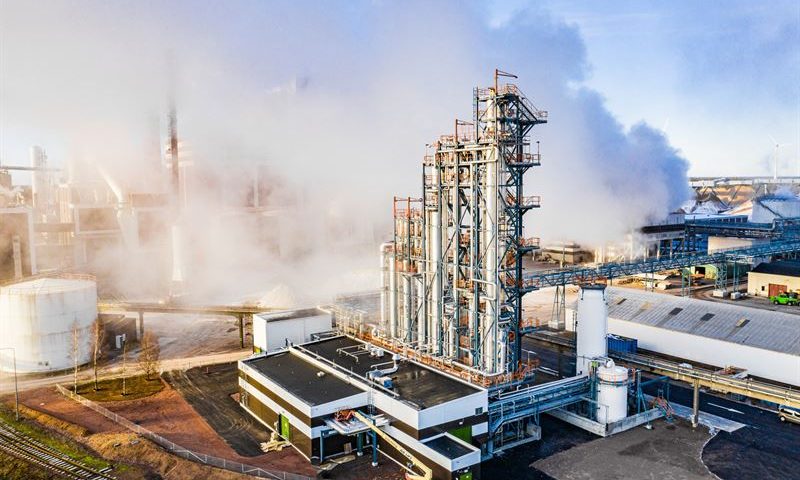
Södra, Sweden’s largest forest-owner association, decided to invest in a biomethanol production facility in 2017, helping them move towards a circular economy, resource-efficiency and being fossil-fuel free. This is a great example of what the Rehap project is also trying to achieve in strengthening the European bio-economy industry.
Södra has built the world’s first plant for commercial biomethanol, a sustainable fuel from forest biomass, at Södra’s pulp mill in Mönsterås. Over the next few days, a first pilot delivery will go to Emmelev A/S, a customer that will be using biomethanol in its biodiesel production.
“It is with pride that we have now started up the first commercial plant in the world for biomethanol. The transition to a bioeconomy means that all raw materials must be used efficiently. Biomethanol is produced from the crude methanol recovered from the manufacturing process at Södra’s pulp mills. It is part of the circular process that already exists in Södra’s mills, in which all parts of forest products are used for the best possible effect. With this step, we are showing the way to a fossil-free society, and it is fully in line with our own strategy for fossil-free transportation by 2030,” said Henrik Brodin, Strategic Business Development Manager at Södra.
The investment is also broadening Södra’s product portfolio with a new bioproduct.
“More and more people are realising why we need to switch to fossil-free alternatives. That’s why it feels so great that we can bring biomethanol to the market as a substitute for fossil methanol in the transport sector as well as a chemical base. Demand for bio-based products is favourable and we have long experience in delivering other bioproducts to the fuel and chemical industries. As we now continue to build on that, it feels particularly gratifying to have made a first pilot delivery to our customer Emmelev A/S. We are now looking forward to continuing the development of the product together with our customers,” said Viktor Odenbrink, Sales Manager at Södra Cell Bioproducts.
Emmelev A/S is a Danish family-owned agricultural company that has developed large-scale biodiesel production from local canola, but uses fossil methanol as a raw material in production.
“Biodiesel will play a key role in the transition to a fossil-free Denmark and we are very happy that Swedish biomethanol will now be used in production. Our biodiesel will be 100% renewable and based on locally sourced raw materials. Biodiesel produced from Danish canola and Swedish forests can secure fuel supplies for heavy road transport, as well as buses and construction machinery. This will be crucial for a transformation of the energy sector. We emphasise local and regional production and consider Sweden part of our local area, and we have good relationships with Swedish companies. It therefore feels natural to be entering into an agreement with Södra,” said Morten Simonsen, co-owner of Emmelev A/S.
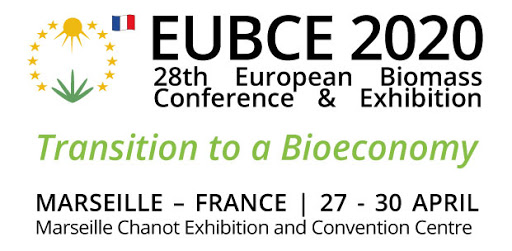
Rehap will be holding a workshop in April at the 28th European Biomass Conference and Exhibition (EUBCE) in Marseille.
EUBCE has grown from a small research community biomass conference more than 30 years ago into a well-established international conference, tackling challenges ranging from biomass growth and biomass conversion to bioenergy, biofuels and bioproducts, sustainability and policies, and to provide a forum for industrial implementation of technologies enabling the transition away from fossil fuels economies.
The 28th EUBCE will expand its portfolio from energy related biomass production and conversion of bio-based feedstock to other sectors of the economy and will now integrate the bioeconomy into its conference programme.
Rehap’s workshop at the event will focus on the revalorization of biomass, and will discuss valuable information from the project about the processes involved in obtaining the intermediates, the developments and innovation in producing bioproducts and the integration of these products in exciting new bio-based materials.
If completed in time, there will also be discussion about the LCA/LCC of a “virtual biorefinery” integrating all of the REHAP processes. This is a very novel development by REHAP and, if finished on time for April, will be presented at the workshop.
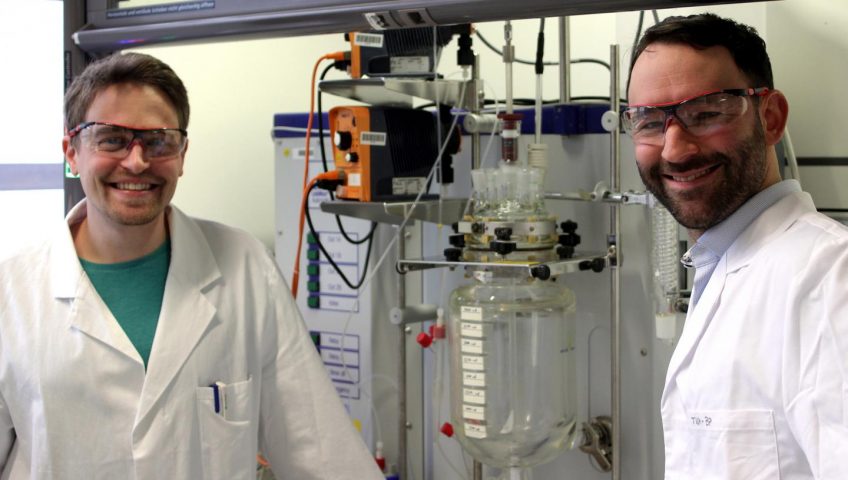
One of the main objectives of Rehap is to develop new methods for turning natural waste products into sustainable polyurethanes. A research team from the Fraunhofer Society and the Technical University of Munich (TUM) led by chemist Volker Sieber has been carrying out similar work, developing a new polyamide family which can be produced from a byproduct of cellulose production.
Polyamides are important plastics. They can be found in ski bindings and in cars or items of clothing. Commercially, they have been made predominantly from crude oil up until now; there are just a few “green” alternatives, such as polyamides based on castor oil.
Bio-based compounds are often significantly more expensive to produce and have therefore only been able to penetrate the market before now if they have had particular properties.
A team led by Volker Sieber, Professor of the Chemistry of Biogenic Raw Materials at TU Munich, has now developed a completely new polyamide family which can be produced from a byproduct of cellulose production.
New polyamide family
The biogenic starting material, (+)-3-carene, is made up of two rings which are fused to one another. The chemists at the TUM and the Fraunhofer Institute for Interfacial Engineering and Biotechnology (IGB) in Straubing have now modified one of the rings in such a way that it can be opened up, yielding a long chain of molecules, a polymer.
The second ring remains intact here. In this way, instead of a linear polymer chain like in traditional polyamides, a chain which bears many small rings and other side groups emerges. This gives the polymer completely new functions.
Special properties
The new polyamides impress thanks to their special properties which make them attractive for many applications. For example, they melt at higher temperatures than the competing crude oil derived products. In addition, the new compounds can be produced transparently as well as in a partially crystalline manner, which increases its later application possibilities using the same starting substance.
“By way of reaction conditions and catalysts during synthesis, we can easily control whether we will obtain a transparent or partially crystalline polyamide in the end,” explains Sieber. “However, the basis for this is offered above all by the specific structure of the bio-based starting material which would be very expensive to obtain from fossil raw materials.”
Increasing sustainability
From an industrial point of view, it is important that the synthesis basically takes place in one reaction container. This “one-pot” process would not just allow a significant reduction in costs, but would also mean a clear increase in sustainability, according to Sieber.
The biogenic starting material (+)-3-carene can actually be distilled at a high purity and comparatively low cost from the turpentine oil produced as a secondary product in the cellulose industry.
Up until now, the turpentine oil was only heated in the cellulose factories. “We use it as a vital starting material for plastics,” says Sieber. “This is an enormous increase in value.”
No competition with food production
Sieber points out that with turpentine oil being a side product of the forest industry, in contrary to the use of castor oil, we are not competing against food production. The researchers are not yet completely satisfied with the achieved overall yield of the process, this is at 25 percent by mass.
“Thanks to the simple scalability, the potential for an efficient process is very high,” says Paul Stockmann, whose doctoral thesis at the TUM is based on the findings. At the Fraunhofer IGB, the chemist is now working on establishing (+)-3-carene-based polyamides on the market as alternatives to crude-oil-based high-performance polyamides.
This website uses cookies so that we can provide you with the best user experience possible. Cookie information is stored in your browser and performs functions such as recognising you when you return to our website and helping our team to understand which sections of the website you find most interesting and useful.
Strictly Necessary Cookies
Strictly Necessary Cookie should be enabled at all times so that we can save your preferences for cookie settings.
If you disable this cookie, we will not be able to save your preferences. This means that every time you visit this website you will need to enable or disable cookies again.