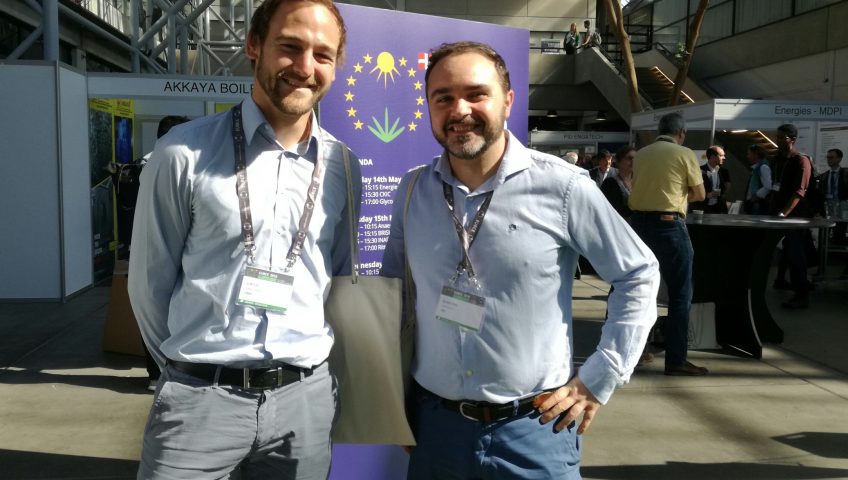
The 26th European Biomass Conference & Exhibition in Copenhagen featured some ambitious and interesting topics on the role of biomass for climate protection and sustainable development. Lars Wietschel and Raúl Piñero represented Rehap with two posters at the event and noted that the processing of biomass into biofuels for trucks and planes was one of the hot topics of the week.
Every year, thousands of delegates, speakers and presenters from around the world attend the prestigious European Biomass Conference & Exhibition (EUBCE) to discuss, collect, exchange and disseminate scientific and industrial know-how in the field of biomass.
On 14-17 May 2018, EUBCE saw participants from sectors including biofuels, biomass feedstock, waste management, bio-plastics and biopower attend. Lars Wietschel and Raúl Piñero presented two separate posters on the ground-breaking developments happening in Rehap: “Future availability of lignocellulose feedstock from agricultural harvesting residues”, and “A novel and quick method for characterising lignocellulosic materials in biorefinery processes: Thermogravimetric analysis and predictive kinetic model (TGA-PKM) method”.
Piñero’s poster was on defining standard methods and analysis procedures for evaluating the quality of the biomass used as feedstock using faster methods than already available.
Wietshel’s poster on the availability of agroforestry feedstock looked at the methodology tool Rehap has developed to forecast on a regional basis the future availability of lignocellulose feedstock from agricultural residues in Europe. Lignocellulose is a biomass component that can act as a substitute for petrochemicals.
Wietsche,l after his short oral presentation on the poster, struck up conversation with Berien Elbersen who was working on the S2BIOM project with a similar assessment on feedstock potentials. Though using different methodologies, the results were similar.
The conference and exhibition were heavily focused on technical products in the field of biomass valorisation and provided delegates with an eye-opening view into the trends and technologies that are currently being hyped. One in particular, hypothermal liquefaction, is the process of converting wet biomass into crude-like oil. With enough pressure and heat, biomass can be processed into fuel and used for truck and jet fuel.
As always, EUBCE was alive with speakers, developers, professors and some of the biggest names in the biomass industry, providing Rehap with an unmissable opportunity to both share its ground-breaking work and take away an abundance of new information.
For more information on Rehap’s attendance at EUBCE, please contact Lars Wietschel: lars.wietschel@wiwi.uni-augsburg.de

